
The oil and gas industry has embraced digital simulation technologies across every stage of operations, from initial exploration to final refining. These sophisticated virtual environments replicate physical assets and processes with remarkable accuracy, enabling companies to optimize performance, enhance safety, and reduce costs throughout the value chain. As simulation technology continues to advance, it's becoming an indispensable tool for decision-making, training, and operational planning in an industry where mistakes can be extraordinarily costly. This article examines the various types of simulation solutions revolutionizing upstream, midstream, and downstream operations.
Reservoir Simulation and Exploration Optimization
Reservoir simulation represents the foundation of modern exploration and production planning. These complex mathematical models recreate subsurface conditions, accounting for geological formations, fluid properties, and pressure dynamics. By inputting seismic data, well logs, and core samples, geoscientists can create accurate digital twins of reservoirs that predict fluid behavior over time. Advanced simulation software can model multiphase flow (oil, water, and gas) through porous rock formations, helping engineers determine optimal production strategies that maximize recovery while minimizing environmental impact.
The predictive capabilities of reservoir simulation extend throughout a field's lifecycle. During exploration, simulations help assess commercial viability by estimating recoverable reserves. In development phases, they inform well placement and production facility design. For mature fields, simulations guide enhanced oil recovery techniques like water flooding or gas injection. Modern solutions incorporate machine learning to continuously refine models based on actual production data, creating a feedback loop that improves accuracy over time. This dynamic approach has helped some operators increase recovery rates by 5-15% compared to traditional methods.
Reservoir simulation isn't limited to conventional resources. Specialized models address the unique challenges of unconventional plays like shale formations, where complex fracture networks and nano-scale porosity require different modeling approaches. Similarly, reservoir simulation plays a crucial role in carbon capture and storage projects, helping engineers predict how injected CO2 will behave underground over decades or centuries. These applications demonstrate how simulation technology supports both traditional hydrocarbon production and emerging energy transition initiatives.
Drilling and Well Construction Simulation
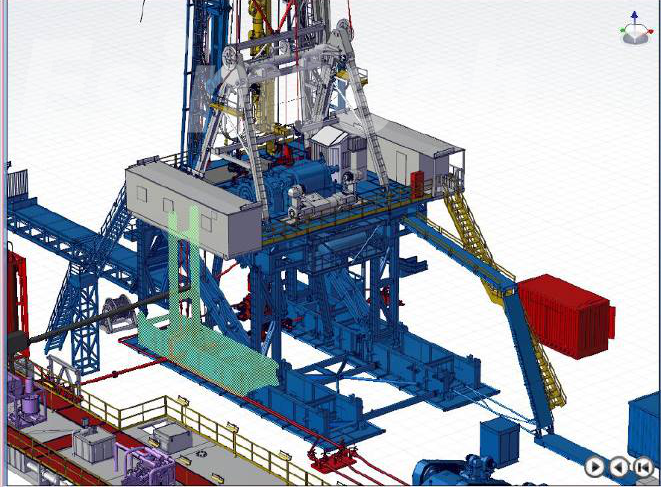
Drilling operations benefit immensely from simulation technology, which allows engineers and field personnel to plan and practice complex procedures in risk-free virtual environments. On Land Drilling Simulators replicate the entire drilling process with remarkable fidelity, from routine operations to emergency scenarios like kicks or stuck pipe. These systems train crews in equipment operation, well control procedures, and troubleshooting while collecting performance metrics that identify areas for improvement. The most advanced simulators incorporate virtual reality to create immersive training environments that accelerate skill acquisition and improve retention compared to traditional methods.
Beyond training applications, drilling simulation supports operational planning and optimization. Engineers can test different drilling parameters (weight on bit, rotation speed, mud properties) in virtual wells before committing to physical operations. This capability is particularly valuable in challenging environments like deepwater or high-pressure/high-temperature wells where mistakes carry significant consequences. Some operators report 20-30% reductions in drilling time and 15-25% lower costs after implementing comprehensive simulation-based planning processes. The technology also enables remote expert support, with experienced drilling engineers able to virtually "enter" a simulated well to diagnose problems and suggest solutions.
| Simulation Type | Key Applications | Operational Benefits |
|---|---|---|
| Reservoir Simulation | Reserve estimation, production optimization, EOR planning | 5-15% increased recovery, better field development |
| Drilling Simulation | Well planning, crew training, emergency response | 20-30% faster drilling, 15-25% cost reduction |
| Process Simulation | Refinery optimization, capacity planning, safety analysis | 3-8% yield improvement, 10-20% energy savings |
| Pipeline Simulation | Hydraulic modeling, leak detection, surge analysis | 15-25% throughput increase, reduced downtime |
| Safety Training Sim | Emergency response, equipment operation, hazard recognition | 40-60% incident reduction, faster response times |
Process Simulation for Midstream and Downstream
Refinery Optimization
Detailed models of distillation columns, reactors, and other units enable engineers to test operating parameters and identify efficiency improvements that can increase yields by 3-8% without capital investment.
Pipeline Network Management
Hydraulic simulation models optimize product movement through complex pipeline systems, balancing flow rates, pressures, and pump operations to maximize throughput while minimizing energy consumption.
Process Safety Analysis
Advanced simulation identifies potential hazards in chemical processes, helping engineers design safer systems and develop effective emergency response procedures for worst-case scenarios.
Supply Chain Coordination
Integrated models of production, storage, and transportation systems enable better coordination across the value chain, reducing inventory costs and improving delivery reliability.
The integration of real-time data with process simulation creates dynamic digital twins that continuously mirror physical operations. These living models detect deviations from optimal performance immediately, allowing operators to make adjustments before efficiency losses become significant. Modern Petroleum Simulators can even predict future operational states based on current trends, enabling proactive rather than reactive management. One refinery reported saving $15 million annually by using predictive simulation to anticipate and prevent operational upsets before they occurred.
Immersive Training and Safety Applications
Virtual reality and augmented reality training simulations have transformed workforce development in the oil and gas sector. These immersive technologies place trainees in hyper-realistic environments where they can practice complex procedures and emergency responses without real-world risks. From routine equipment operations to rare but critical events like well control incidents or refinery fires, simulation-based training ensures personnel develop both technical skills and the decision-making ability to handle high-pressure situations. Studies show VR-trained personnel demonstrate 70% better knowledge retention and 50% faster response times in emergencies compared to traditionally trained counterparts.
Beyond individual training, simulation facilitates team coordination and communication during complex operations. Multi-user virtual environments allow distributed teams to rehearse integrated responses to emergencies, ensuring seamless coordination when real incidents occur. These applications extend to contractor onboarding, where simulation provides consistent training standards across organizations despite varying physical equipment. The data collected during simulation sessions also creates objective performance metrics for competency assessment, replacing subjective evaluations with quantifiable measures of operational readiness.
The evolution of oil and gas simulation technology continues to accelerate, with emerging capabilities like artificial intelligence, digital twins, and cloud computing opening new possibilities for operational optimization. As these tools become more sophisticated and accessible, they're transforming from specialized applications into comprehensive platforms that integrate across organizational silos. Companies that effectively leverage these technologies gain significant competitive advantages through improved efficiency, enhanced safety, and better decision-making across the entire hydrocarbon value chain.
About the Author